Beolgyo Cockles — Boseong's Tidal-Flat Delicacy

Ask anyone in Korea about Boseong food and you’ll hear one word: 꼬막 (cockles) from Beolgyo (벌교). The town sits on rich tidal mudflats that produce some of the country’s most prized cockle clams. What to know What it is. Small, plump cockle clams with a clean, briny-sweet taste and a slightly chewy bite — a true regional specialty. When. Cockles are at their best in the cold months (roughly late autumn through winter), when they’re fattest. A festival celebrates them in season. How it’s served. The local way is a cockle full-course (꼬막정식): lightly boiled whole cockles you pry open yourself, plus cockles in seasoned soy, cockle bibimbap, pancakes, and more — one clam, a dozen ways. Tips for visitors Eat it in Beolgyo if you can — freshness is the whole point. Pair a tea-fields morning with a Beolgyo lunch; the town is an easy hop within the Boseong area. Beolgyo is also known in Korean literature (the novel Taebaek Sanmaek), so the old town has a quiet historical feel worth a short wander. Source: Korea Insider — Boseong & Beolgyo cockles
2026년 6월 11일 · 1 분

Boseong Green Tea Fields (Daehan Dawon)

The Daehan Dawon (대한다원) plantation is the picture of Boseong — steep, sculpted tea terraces that stay green all year. It’s the image you’ve probably seen on Korea travel posters, and it lives up to it. What to see The cedar-lined entrance. A tall avenue of cedars leads in from the gate. Come early, before the tour buses, and you may have it almost to yourself. The terraces & hilltop viewpoint. Walking paths climb between the rows to an observation point with the whole amphitheatre of tea below you. A hidden bamboo forest. Turn off near the upper paths and you’ll find a quiet bamboo grove — a cool detour in summer. Green-tea everything. At the foot of the fields, cafés serve Boseong green tea, green-tea ice cream, and even green-tea noodles. Practical info Hours: roughly 9:00–18:00 daily (shorter in winter). Admission: around ₩4,000 for adults (₩3,000 children/seniors). Verify current prices before you go. Best time: green year-round. Spring (new shoots) and summer are lushest but busiest; autumn and winter are quieter — and in winter the plantation hosts a light festival. Tip: arrive at opening for the quiet, misty fields and the best photos. Nearby, the Korea Tea Museum / Boseong Tea Culture Park gives the history of how this valley became Korea’s tea capital — an easy add-on. ...

2026년 6월 11일 · 2 분

How to Get to Boseong

Boseong is located in South Jeolla Province (Jeollanam-do), in the southwestern part of South Korea. It offers an authentic rural experience, which is precisely its unique charm. Therefore, you should allow several hours for travel. From Seoul Express/Intercity Bus (Simplest Option): Express buses operate from Seoul Central City Terminal to Boseong Bus Terminal, taking approximately 4 hours and 40 minutes. This is the most straightforward way to get there directly. Using the ‘Gosokbus T-money’ Android app, you can select ‘Central City (Seoul)’ as your departure point and ‘Boseong, Jeollanam-do’ as your destination to reserve tickets. Buses currently depart twice daily, at 8:40 AM and 3:10 PM. Train + Transfer: Take KTX or SRT to GwangjuSongjeong Station, then transfer to a train bound for Suncheon, which will take you to Boseong Station. Mugunghwa trains operate four times a day, departing at 6:05 AM, 11:16 AM, 4:17 PM, and 8:04 PM, with a journey time of about 1 hour and 10 minutes. If the wait for a connecting train is long, an alternative is to take a direct bus. From GwangjuSongjeong Station’s subway stop, you can alight at Hakdong Station or Sotae Station and catch a direct bus to Boseong, which runs at intervals of 1 to 1.5 hours. Always confirm current schedules on the day of your visit. Getting Around Boseong Car / Taxi is the easiest way to connect the spread-out attractions like the tea plantations → Yulpo Beach → Beolgyo. Local buses also connect the main tourist spots, but they run infrequently, so be sure to allocate ample time. Consider staying overnight in Boseong-eup or near the tea plantations. This will allow you to explore the tea fields at opening hours without rushing. Local Tip Follow the Boseong River inland towards Nodong-myeon, and you’ll discover our valley. This is where you’ll find tranquil villages, a history of ancient clans, and the spring of Daeheung Farm. While it’s not on any typical tourist route, this is the true essence of Boseong.

2026년 6월 11일 · 2 분
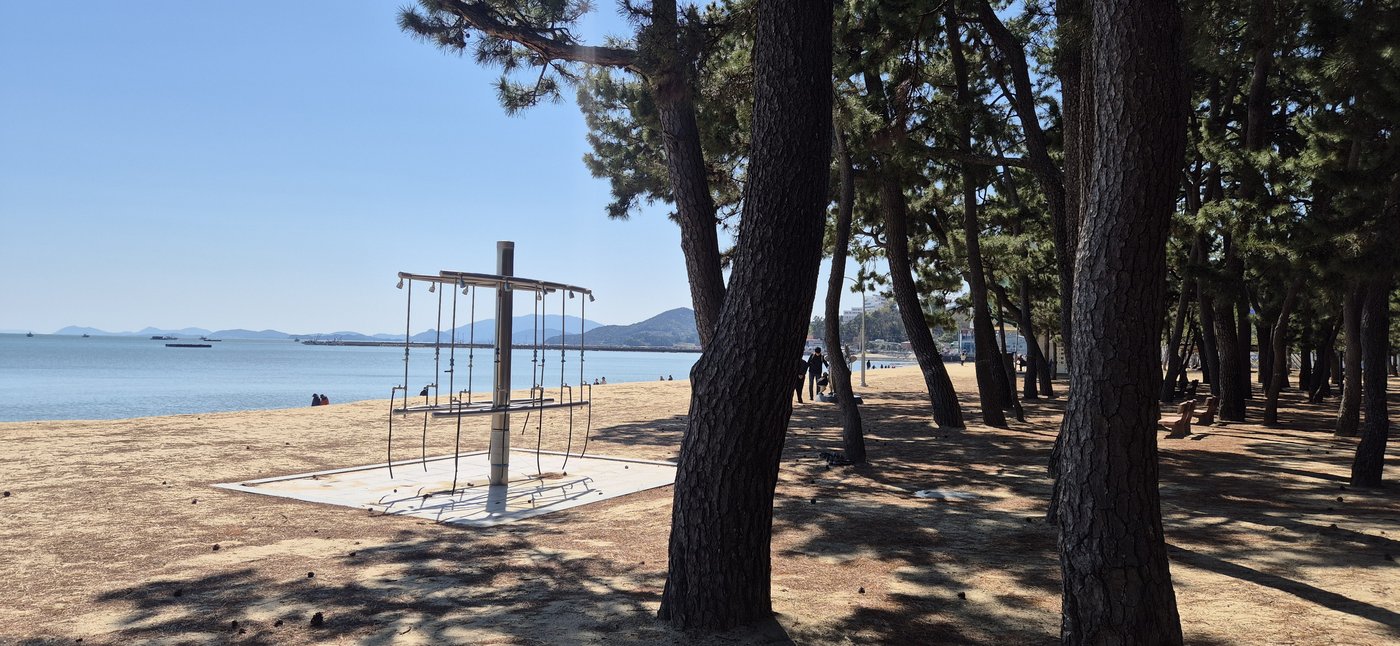
Yulpo Beach — old pine forest meets the sea

Yulpo Beach and Green Tea Spa

After ascending the tea fields in the morning, make your way down to the Yulpo (Yulpo) coast. It’s a sandy cove where an ancient pine forest grows densely, stretching all the way to the beach. The pine trees cast deep shadows over the sand, and the sea glitters through their trunks. Then, conclude your day with something Boseong does exceptionally well: a seawater green-tea bath (haesu nokchatang) directly facing the ocean. ...

2026년 6월 11일 · 3 분