The roots of Daeheung — a mother, a farm, a spring, and a pavilion.
大興 — daeheung — means “great flourishing.”
Everything here began with one decision: building a home for my mother on land my grandfather left behind.
She first came to this valley at nineteen, as a young bride. She left for Seoul. She outlived her husband. And then, in her sixties, she chose to come back — to the same land, the same village.
That return is where the farm began. The name Daeheung came with her: it is the name of the village in Goheung where she was born. My mother’s house-name — 대흥댁, Daeheung-daek — became the name of the farm, the spring, and the pavilion.
Daeheung-daek — my mother, and where the name begins
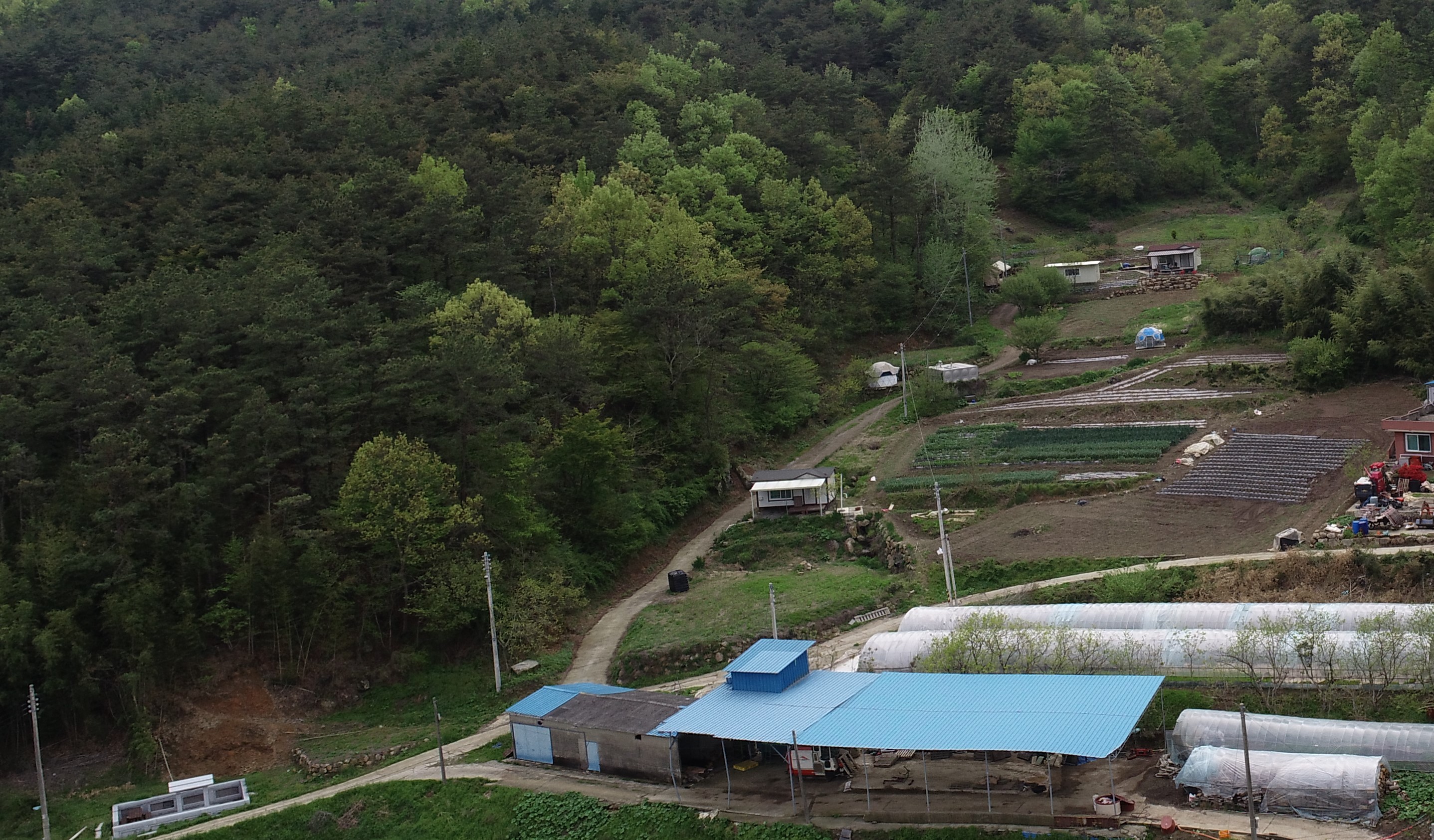
Daeheung Farm (대흥농장) sits in the upper reaches of the Boseong River valley — in Geumho-ri, Nodong-myeon, Boseong-gun, South Jeolla Province. The name means great flourishing, taken from my mother’s house-name, Daeheung-daek.
Built for a Return This land belonged to my grandfather. When my mother — widowed in her early sixties — chose to leave Seoul and return to the village where she had been a young bride, I built her a small house here. Then, around that house, the farm grew: a hand-built spring, a pavilion carried down from Gangwon Province, a summer pool, a garden.
...
Daeheung Pavilion
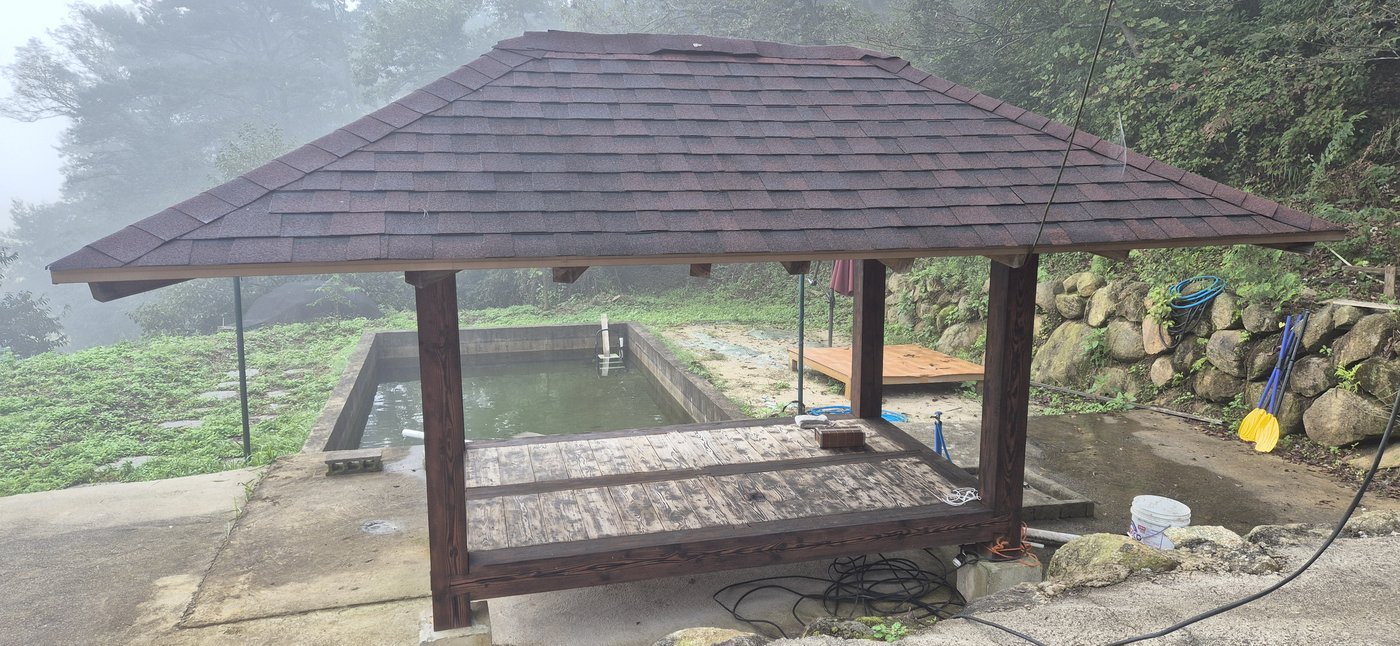
Daeheung Pavilion (대흥루, 大興樓) was not built on this site. It was constructed in a classroom 400 kilometers away and later relocated here.
House Building School in Gangwon Province In 2019, I participated in a hwangto (황토, earthen construction) house-building program in Wonju, Gangwon Province, alongside 15 other participants. The idea was simple: to learn by building a house firsthand.
A full-sized house was too large to be built as a sample in a classroom. So, the group built a pavilion instead — a traditional Korean open-sided structure featuring a roof in the style of a complete house. With its roof, pillars, and floor, it provided a full structural framework on a manageable scale.
...
Daeheung Spring
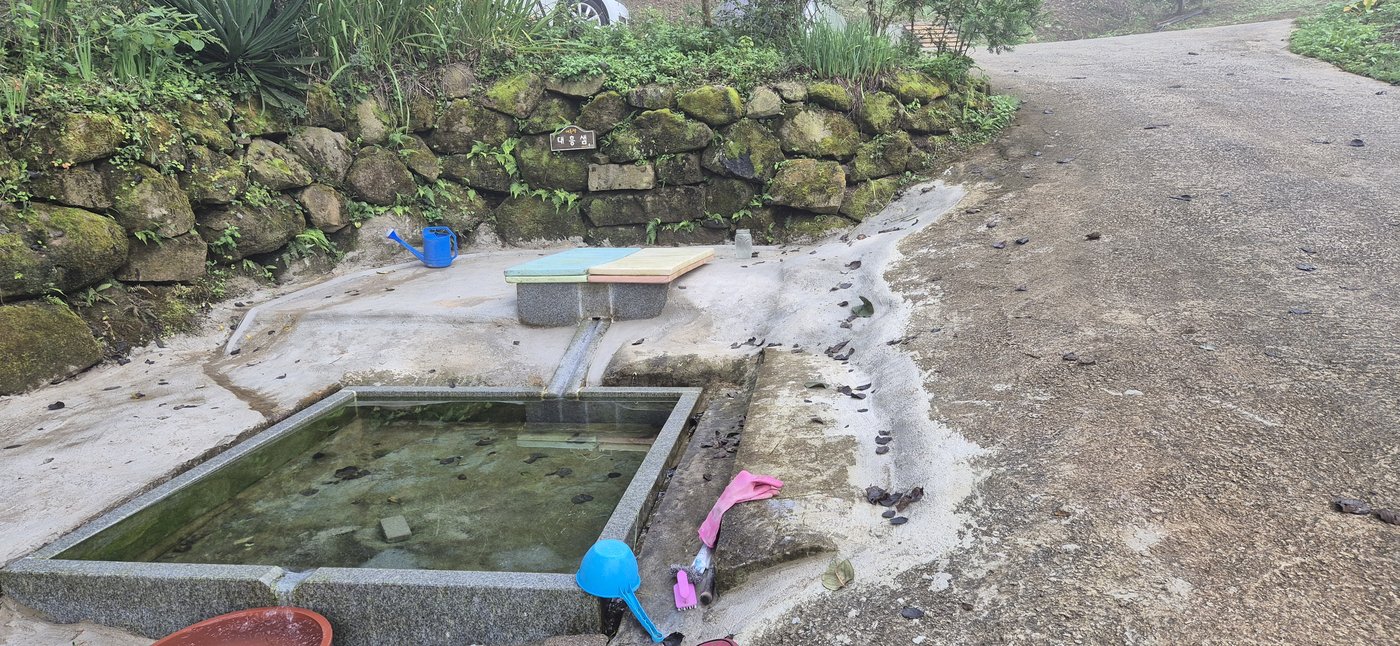
On Daeheung Farm, there is a spring that does not dry in winter. It was always there — a small ongdalsaem (옹달샘), a pool fed from underground. I enclosed it and named it Daeheung Spring (대흥샘).
How It Was Built No magic, no machinery doing the fine work. Just time and mortar.
A hired excavator traced the underground source and opened the ground around it. I ordered a marble coping — the rim that edges the basin — from a stone mason. Then I mixed and applied roughly 100 bags of 40 kg mortar by hand to seal the floor and walls of the basin. That is four tonnes of mortar, mixed and trowelled over several months.
...
Daeheung-daek — My Mother
My mother’s house-name is 대흥댁 — Daeheung-daek — and every name on this farm comes from hers.
Where the Name Comes From She was born in 1940 in Daeheung Village (대흥마을), Geumsan-myeon, Goheung, South Jeolla Province. In rural Korean tradition, a married woman takes her house-name from her birthplace — so when she came to this valley as a nineteen-year-old bride, the village knew her as Daeheung-daek: “the woman from Daeheung.”
...