Spring — Wild Vegetables, Flowers, and Hills

Spring Arrives from the Ground Up In most parts of Europe and North America, spring arrives with colors. Green returns to grey fields, and snow recedes upwards. In rural Korea, spring arrives with taste. Before forsythias and azaleas burst into full bloom, and even before most trees sprout their leaves, the hillsides are already offering sustenance. This is the first thing that surprises foreigners visiting the Korean countryside in March and April: it’s the foraging culture. In the West, foraging for wild plants has become a specialized activity in recent years. It’s pursued by chefs, survivalists, and enthusiasts who take courses to learn what’s safe and unsafe. In rural Korea, it’s simply what people do in spring. Grandmothers who have done it for 60 years. Children learning by following them. Knowledge of which plants grow where, at what altitude, and in what kind of soil is passed down as naturally as recipes. ...
2026년 6월 11일 · 5 분

Summer — Rivers, Valleys, and Catching Freshwater Snails

Summer is heat, and the answer to heat is water Korean summers are humid. Not the dry heat of Southern California or the Mediterranean, where shade provides real relief. Korean summer heat comes with moisture — thick air that wraps around you, that makes the shade only slightly better than the sun. In the cities, people retreat to air conditioning. In the countryside, they go to the river. The Korean countryside is well suited to this response. The rivers and streams that descend from the forested mountains are cold — fed by springs and shaded by trees for most of their upper courses — and the concept of 계곡 (gyegok, mountain valley stream) is inseparable from Korean summer culture in a way that has no precise equivalent in most Western countries. ...

2026년 6월 11일 · 5 분

Autumn — Chestnuts, Persimmons, and the Rice Harvest

The most abundant season If spring in the Korean countryside is about gathering what the hillside offers, and summer is about water and waiting, autumn is about receiving what the year has been building toward. The fields and forest edges deliver simultaneously — and the work of receiving them is constant from September through November. Korean autumn is also, arguably, the most beautiful season in the countryside. The rice paddies turn gold in September and October. The ginkgo trees along village roads go full yellow in November. The persimmon trees — left unpruned and sprawling over farmhouse walls throughout the year — suddenly become the most visually striking objects in any Korean village: heavy with bright orange fruit, glowing against clear blue autumn skies. ...

2026년 6월 11일 · 6 분

Winter — Kimchi, Ondol, and the Art of Slowing Down

Winter in a Korean village The question people ask about Korean rural winter, when they ask it, is whether it is hard. The answer is: it depends on what you expect. Korean winters in the inland south — in valleys like the Boseong River — are cold. Temperatures drop well below zero on winter nights, sometimes for weeks at a time. Snow falls, ice forms on the streams that ran swift all summer. The fields are bare. The persimmon trees, stripped of their fruit, stand with bare branches against pale winter sky. ...

2026년 6월 11일 · 6 분
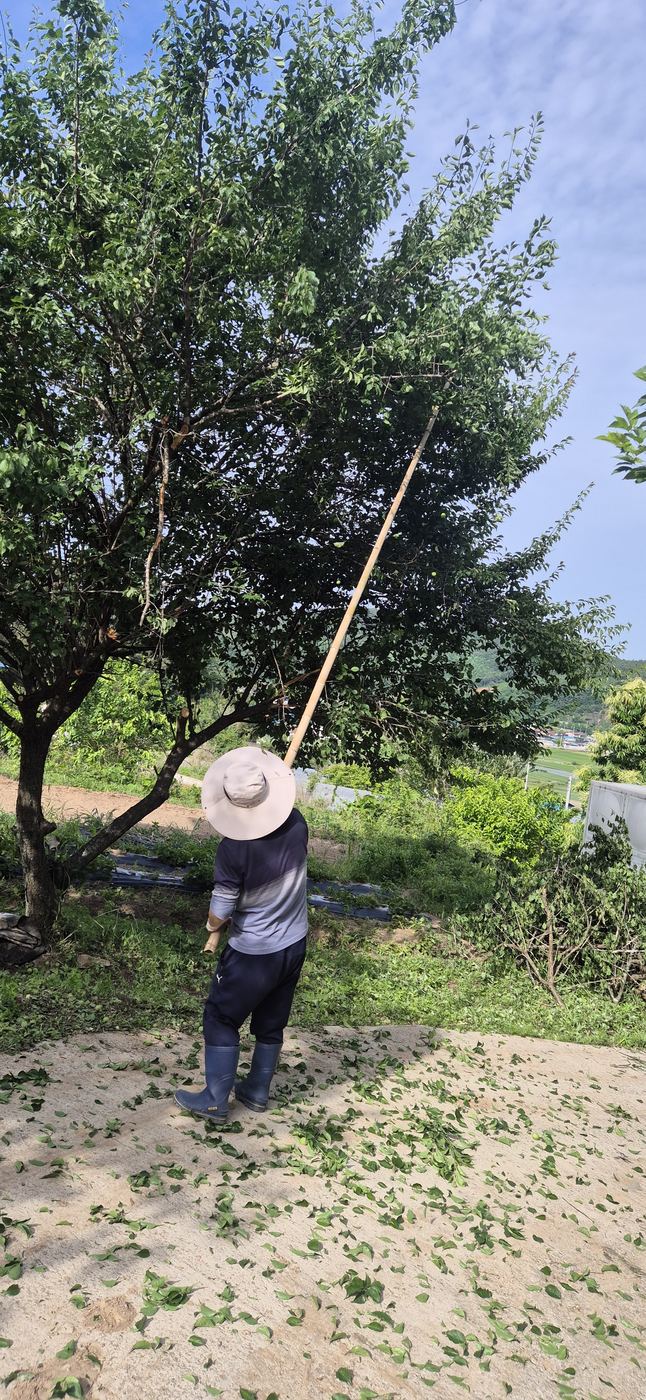
Harvesting maesil plums with a long pole — Daeheung Farm, June

A timely one-week window — harvesting Maesil on Memorial Day

A Short Window of One Week Most fruits give you time. Apples cling to their trees for weeks, allowing you to return and pick them at your leisure. Maesil — a Korean plum, though technically closer to the Japanese ume — does not. Once ripe, maesil drop. Not slowly, and not over the course of a month. Within a week of peak ripeness, they fall to the ground, bruise, and ferment in the summer heat. ...

2026년 6월 11일 · 4 분